
Managing personal finances can often feel like solving a puzzle with missing pieces. Between tracking every single coffee purchase, calculating tax, and trying to build a rainy-day fund, budgeting quickly turns into a chore. That is precisely why the 50/30/20 budget rule has become one of the most popular money management strategies in the world. Popularised by Senator Elizabeth Warren in her book All Your Worth: The Ultimate Lifetime Money Plan, this simple formula strips away the complexity of traditional budgeting. It gives you a clear, straightforward roadmap to balance your daily living costs, lifestyle choices, and future financial security. However, no single financial rule fits every person’s life perfectly. While the 50/30/20 method provides a fantastic foundation, rigid rules can sometimes do more harm than good. In this guide, we will explore how to put the 50/30/20 budget rule into practice, how to tailor it to your household income, and-most importantly-when you should feel empowered to break it.
What Is the 50/30/20 Budget Rule?
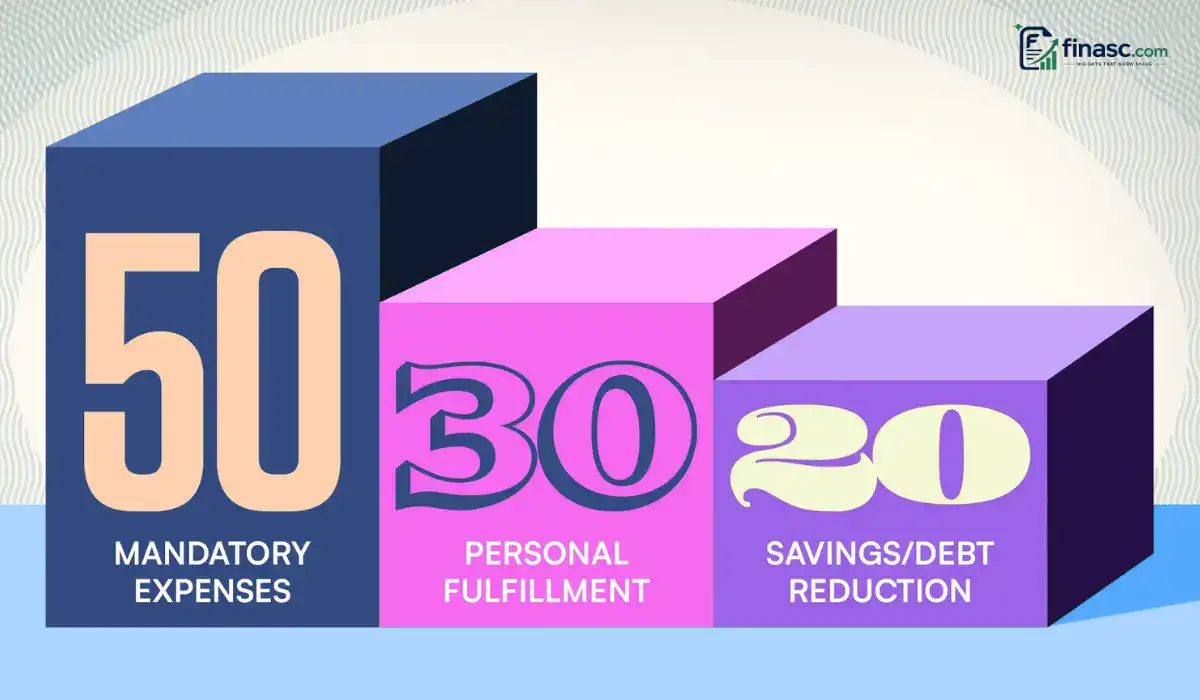
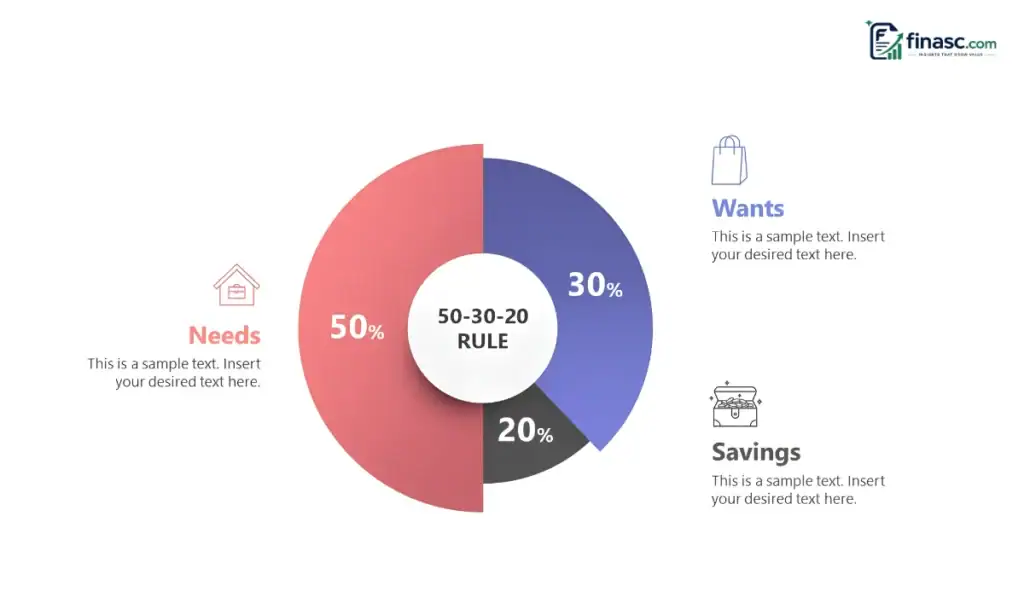
The 50/30/20 budget rule is a intuitive proportion-based budgeting system. Instead of categorising your spending into dozens of microscopic line items, it divides your after-tax income (your net take-home pay) into three main buckets:
- 50% for Needs: Essential living expenses you cannot avoid.
- 30% for Wants: Lifestyle choices and non-essential spending.
- 20% for Savings and Debt Repayment: Building your financial safety net and securing your future.
Because it relies on percentages rather than fixed dollar amounts, this strategy scales automatically with your income. Whether you take home $2,500 or $10,000 a month, the core ratio remains the same.
Step-by-Step: How to Use the 50/30/20 Rule
To get started, you first need to calculate your monthly net income. If you receive a regular salary, check your pay slip for the final figure that lands in your bank account after taxes and statutory deductions. If you are self-employed, subtract your business expenses and estimated tax obligations from your total earnings.
Once you have your monthly net figure, divide it using the percentages below.
1. Allocate 50% of Your Income to Needs
Your “needs” are the non-negotiables-the essential expenses required to maintain basic shelter, health, and employment. If you lost your job tomorrow, these are the bills you would still have to pay to survive.
What counts as a need?
- Rent or mortgage payments
- Basic utilities (electricity, water, gas, heating)
- Essential groceries (excluding dining out or gourmet treats)
- Minimum debt payments (such as credit card minimums or student loan baselines)
- Basic transport costs (fuel, public transport passes, essential car insurance)
- Healthcare and necessary insurance policies
If your take-home pay is $3,500 per month, your total budget for needs should ideally not exceed $1,750.
2. Allocate 30% of Your Income to Wants
Life is not just about paying bills. The “wants” category covers the discretionary spending that improves your quality of life and makes your hard work worthwhile.
What counts as a want?
- Dining out, takeaway coffee, and food delivery
- Entertainment, concert tickets, and cinema trips
- Streaming services and digital subscriptions
- Vacations and weekend trips
- Hobbies, gym memberships, and sports
- New clothing beyond basic functional requirements
Using the same $3,500 net income example, you would have $1,050 per month to enjoy guilt-free on your lifestyle.
3. Allocate 20% of Your Income to Savings & Financial Goals
The final bucket is dedicated to your future self. It protects you against unforeseen financial shocks and helps build long-term wealth.
What counts towards this 20%?
- Contributions to an emergency savings fund
- Private pension top-ups or retirement investments
- Stocks, index funds, or Individual Savings Account (ISA) /savings accounts
- Extra debt repayments (paying down principal faster on credit cards or loans)
For a $3,500 net salary, this means putting $700 directly toward building your financial security every month.
Example Breakdown: The 50/30/20 Rule in Action
To visualize how this looks in real life, consider three different monthly net income levels:
| Net Monthly Income | 50% Needs | 30% Wants | 20% Savings |
| $2,500 | $1,250 | $750 | $500 |
| $4,000 | $2,000 | $1,200 | $800 |
| $6,000 | $3,000 | $1,800 | $1,200 |
Why the 50/30/20 Rule Works So Well
The main reason traditional budgets fail is burnout. Tracking every single dollar creates friction and decision fatigue. The 50/30/20 method succeeds because of three major advantages:
- Flexibility: It offers guardrails without dictating how you spend every single dollar inside a category. If you want to spend your entire “wants” budget on a holiday rather than weekend dinners, you can do so without breaking your budget.
- Guilt-Free Spending: Because 20% is automatically funnelled into savings and 50% covers your essential bills, you can spend your 30% “wants” allocation without feeling guilty.
- Simplicity: It requires minimal maintenance. A quick monthly check-in is usually enough to ensure your spending stays aligned with your goals.
When to Break the 50/30/20 Budget Rule
While 50/30/20 is an excellent baseline, life rarely moves in neat percentages. Rising inflation, local housing costs, and individual financial circumstances mean that sticking strictly to 50/30/20 can sometimes prove unrealistic or counterproductive.
Here are the key situations where you should adjust or completely break the rule:
1. You Live in a High-Cost-of-Living Area
If you rent an apartment in major cities like London, New York, or Sydney, spending under 50% of your income on basic needs might be nearly impossible-especially early in your career. When rent alone absorbs 40% to 50% of your take-home pay, forcing utilities, transport, and food into the remaining 10% is unrealistic.
- How to break it: Shift to a 60/20/20 or 60/25/15 model temporarily. Reduce your “wants” allocation to absorb the higher housing costs while protecting as much of your savings goal as possible.
2. You Are Carrying High-Interest Debt
If you have high-interest credit cards, overdrafts, or personal loans, saving money in a low-interest bank account while paying 20% or 30% interest on debt costs you money every single month.
- How to break it: Pivot to a 50/10/40 or 50/20/30 framework. Slash your discretionary “wants” budget to the minimum and throw every available dollar into paying off high-interest debt aggressively.
3. You Earn a Lower Income
When your income is lower, basic survival requirements-groceries, heating, transport, and basic rent-naturally consume a far higher percentage of your overall earnings. Telling someone on a tight income to cap their needs at 50% is often unachievable.
- How to break it: Adopt a 70/20/10 structure. Prioritise keeping your basic needs covered (70%), build a small emergency cushion (10%), and retain a small amount for quality of life (20%). As your income grows over time, you can gradually work back toward the standard 50/30/20 distribution.
4. You Have Aggressive Financial Goals
If you are saving for a house deposit, planning to launch a business, or pursuing early retirement, saving 20% may not move the needle fast enough.
- How to break it: Flip the proportions to 50/10/40 or even 40/10/50. By temporarily scaling back non-essential spending, you can accelerate your progress toward major milestones.
Conclusion
The 50/30/20 budget rule is a powerful, flexible tool designed to give your money structure without taking away your freedom. It provides a simple framework to ensure you cover today’s bills, enjoy your present life, and prepare for tomorrow’s security.
Remember that personal finance is deeply personal. The standard 50/30/20 baseline is a guide post, not a rigid law. Assess your current living costs, evaluate your financial priorities, and adjust those percentages to create a budget that actually fits your life.