
Most people trade time for money every single day. They wake up, go to work, earn a salary, and repeat the cycle. That is active income in its purest form. Yet a growing number of people are discovering a different path, one that lets money work while they sleep. Understanding the difference between active and passive income is the first real step toward building lasting wealth and gaining true financial freedom. This guide breaks down both types of income in plain language. You will see how they work, where they differ, and practical ways to combine them so you can move closer to independence.
What Is Active Income?
Active income is money you earn through direct effort. You show up, perform a task, and get paid. The moment you stop working, the money usually stops too. Common examples include a regular job salary or hourly wage, freelance writing, design or consulting fees, running a service-based business where you deliver the work yourself, and overtime pay or commissions tied to sales you make. Active income has clear strengths. It is often predictable. You know roughly how much will land in your account each month. It also tends to arrive quickly. Complete the work, send the invoice or receive the payslip, and the funds follow. The downside is obvious. Your income is tightly linked to your time and energy. Illness, holidays, or simply wanting a slower pace can cut earnings. There is also a hard ceiling. There are only so many hours in a week you can sell.
What Is Passive Income?
Passive income is money that continues to arrive with little or no ongoing daily effort after the initial setup. You invest time, money, or skill once (or a few times), then the system generates returns. Classic examples include rental income from property, dividends from shares, royalties from a book, course or music, earnings from digital products sold online, interest from savings or peer-to-peer lending, and affiliate marketing commissions from content that keeps ranking. True passive income is rarely completely hands-off. Properties need maintenance. Portfolios need occasional review. Online products may need updates. Still, the effort required is far lower than trading hours for pounds every week. The real power of passive income sits in its ability to scale. One well-built asset can serve hundreds or thousands of people at the same time. That is why many people chasing financial freedom treat passive streams as the long-term goal.
Key Differences Between Active and Passive Income
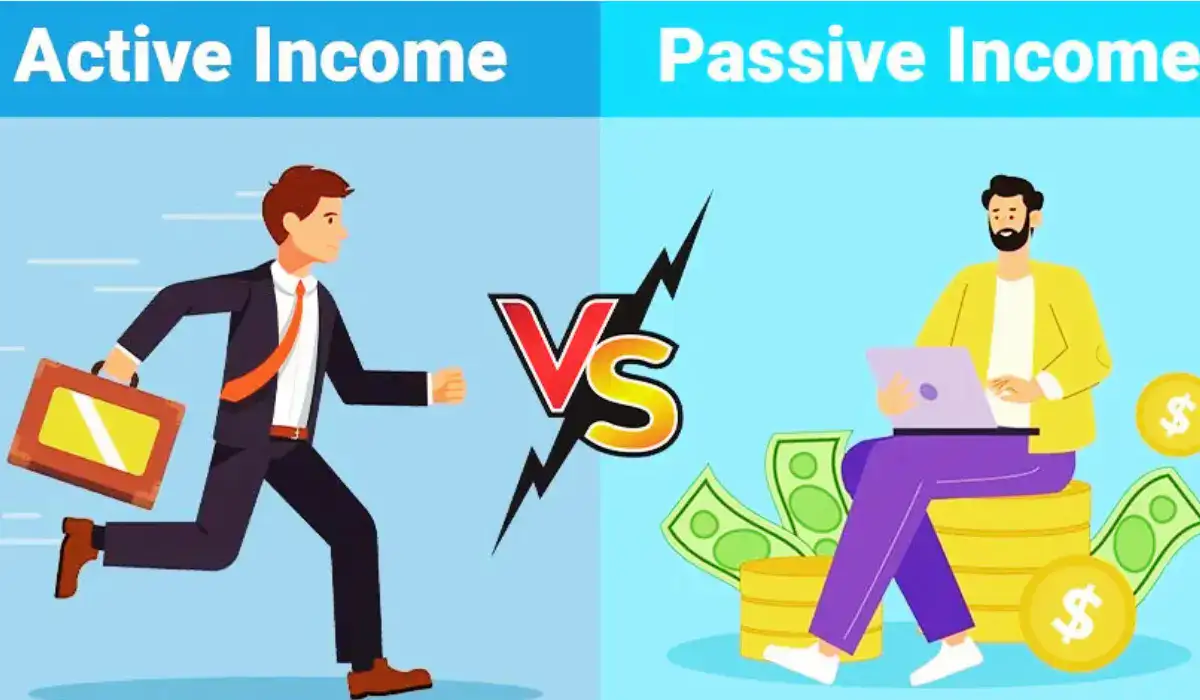
The contrast becomes clear when you place them side by side.
- Time commitment: Active income demands ongoing hours while passive income front-loads the work and then runs with lighter input.
- Scalability: Active income is limited by your personal capacity, whereas passive income can grow without you working more hours.
- Risk and start-up: Active income is usually lower risk and quicker to begin, but passive income often needs capital, skills or patience to establish.
- Lifestyle impact: Active income keeps you tied to a schedule. Passive income, once established, frees up time and location.
- Overall balance: Neither is better in every situation. Most people need active income to cover living costs while they build passive streams. The smartest approach is rarely pure one or the other.
Why Mixing Both Creates Stronger Wealth
Relying only on active income leaves you vulnerable. A job loss or health issue can stop the money overnight. Pure passive income can take years to reach meaningful levels, and early cash flow may be low. Combining the two gives balance. Your active work funds daily life and provides capital to invest. The passive side slowly reduces pressure on your time. Over years, the passive portion can grow until it covers a larger share of your needs. Many people who reach financial independence follow a similar pattern. They maximise active earnings in their thirties and forties, live below their means, and systematically buy or build assets that produce passive returns. The result is choice. They can keep working because they want to, not because they have to.
Practical Ways to Grow Active Income

Before you can invest, you usually need surplus cash. Improve skills that the market values, as learning a high-demand skill can justify a higher rate or promotion. Negotiate better pay or move to a higher-paying role. Add side work that uses existing strengths such as tutoring, consulting or weekend projects to create extra cash without quitting your main job. Track your time. Many people discover they can earn more by focusing on higher-value tasks and dropping low-value ones. The goal is not endless hustle. It is to create a temporary surplus that you can direct into assets.
Realistic Paths to Passive Income
Building passive income takes intention. Regular investments into broad market funds or quality dividend shares can create a growing stream of income, and reinvesting dividends accelerates the process through compounding. Buy-to-let remains popular, though stamp duty, regulations and interest rates matter. Some start with smaller steps such as house shares or later move into commercial property. Others prefer real estate investment trusts for exposure without direct management. Create a course, ebook, template pack or YouTube channel once and sell or monetise it repeatedly. Success depends on solving a real problem and marketing effectively. Affiliate sites, dropshipping stores with solid systems or software tools can generate sales while you sleep. Early work is heavy. Later maintenance is lighter. Peer-to-peer lending and bonds can provide steady interest, though risk levels vary. Only use money you can afford to lock away or potentially lose part of. Start small. Test one idea thoroughly before spreading effort across many.
Common Mistakes to Avoid
People often trip up in predictable ways. They expect passive income to appear quickly and with almost no work, yet most streams need months or years of consistent effort first. They ignore tax. Rental income, dividends and royalties all have tax implications, so plan ahead or speak to an adviser. They chase shiny objects. Jumping from one opportunity to another rarely builds momentum. They forget risk. Diversify. Do not put everything into one property or one online product. Patience and consistency beat constant switching.
Building Toward True Independence
Financial freedom is not about never working again for most people. It is about having enough passive income to cover essential costs so that work becomes optional. You gain the ability to choose projects, take breaks or change direction without panic. Track two numbers over time: your total monthly expenses and your total passive income. When the second reliably exceeds the first, you have crossed an important line. Until then, keep growing both sides of the equation. Review progress every quarter. Adjust spending, increase investment rates or refine the passive systems that underperform. Small, steady improvements compound powerfully.
Final Thoughts
Active income pays the bills and funds the early years of wealth building. Passive income multiplies your effort and eventually buys back your time. The ultimate advantage comes from using both deliberately. Begin where you are. Strengthen your active earnings if needed. Direct surplus into assets that can generate returns without constant labour. Stay patient, stay consistent and keep learning. Over time the balance shifts. The result is not just more money. It is greater control over how you spend your days. That control is the real meaning of financial freedom and true independence.